Numata Center for Buddhist Studies
Workshop by National Taiwan University and University of HamburgRethinking socially engaged Buddhism: History, theory, and practice from early Buddhism to contemporary East Asia
2 October 2026
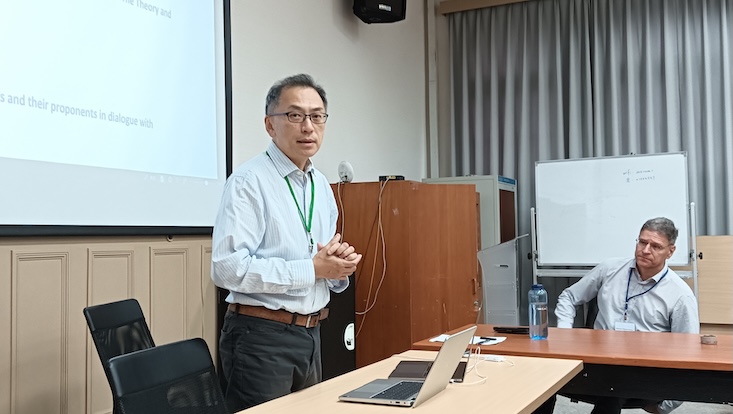
Photo: Carsten Krause
Welcome Address by Keng Ching
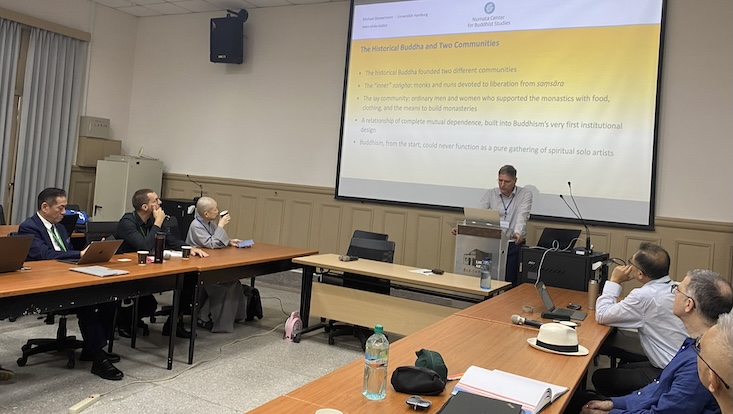
Photo: Leo M. Koenig
Keynote by Michael Zimmermann
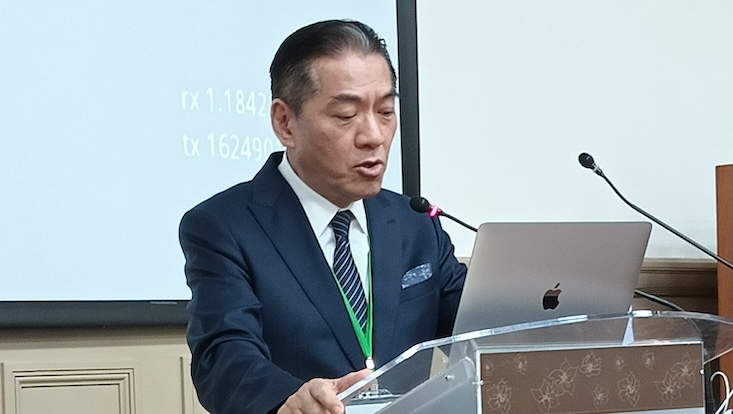
Photo: Carsten Krause
Keynote by Her Ray-Sheng
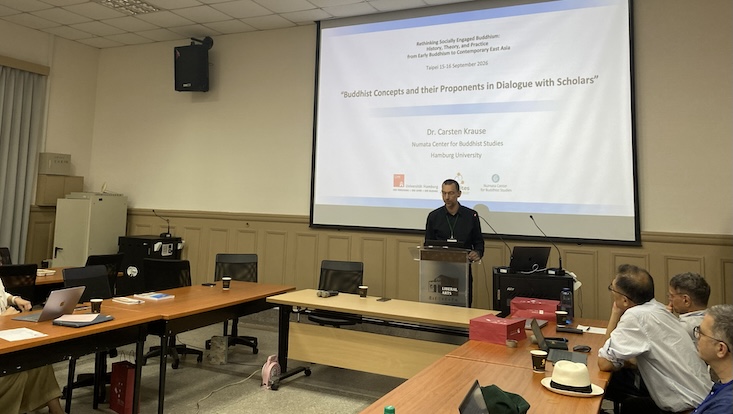
Photo: Leo M. Koenig
Keynote by Carsten Krause
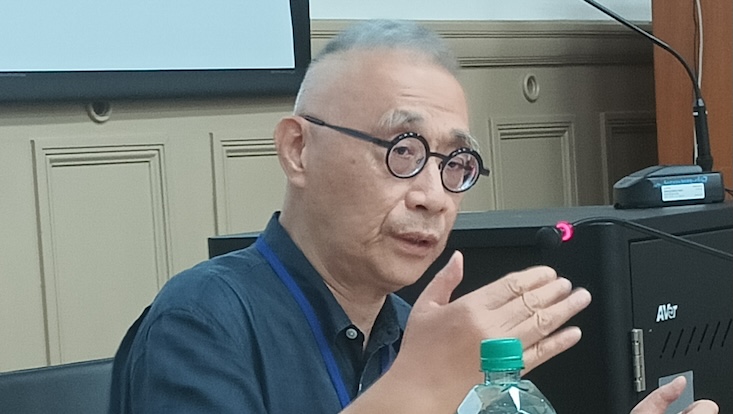
Photo: Carsten Krause
Keynote by Lawrence Lau
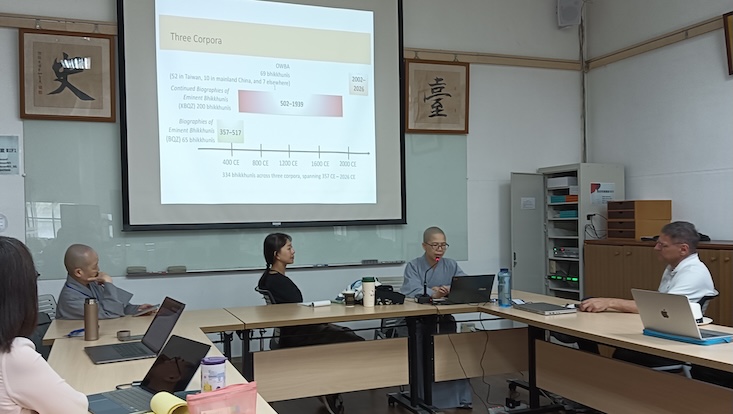
Photo: Carsten Krause
Presentation by Ven. Jian-Nor
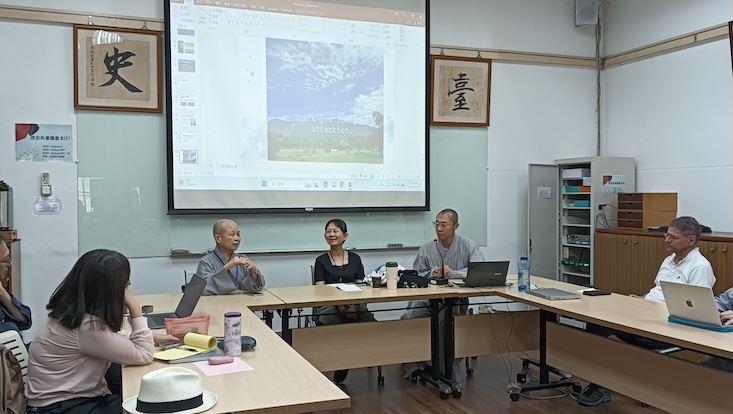
Photo: Carsten Krause
Presentation by Ven. Chao-Hwei
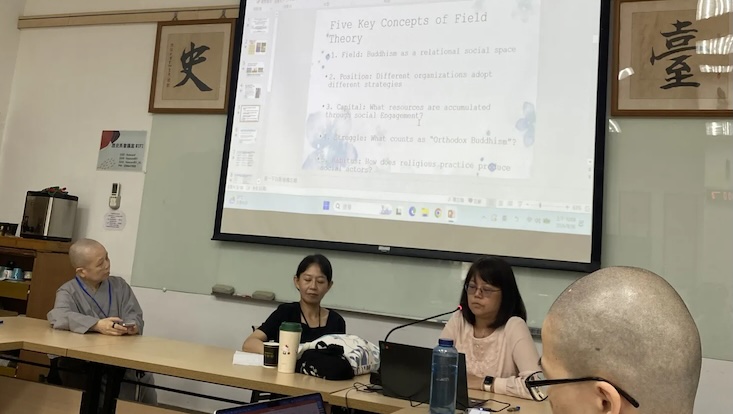
Photo: Leo M. Koenig
Presentation by Liu Yi-Ning
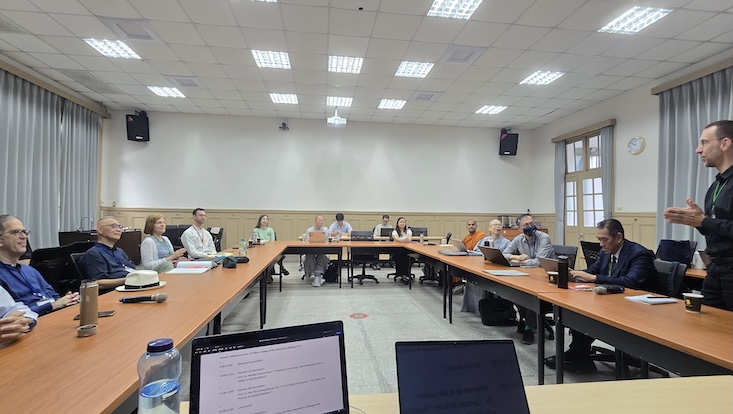
Photo: Michael Zimmermann
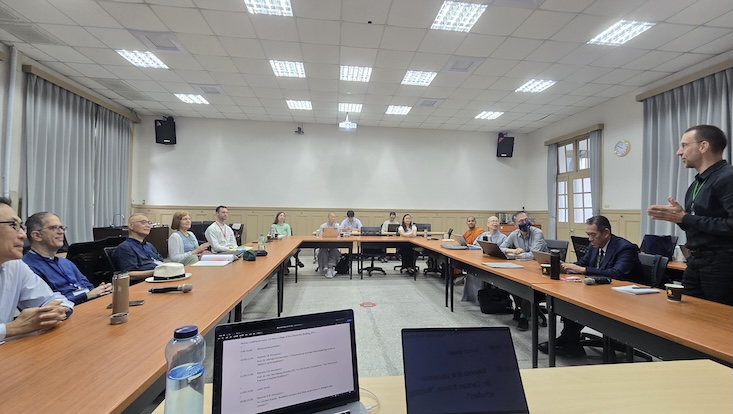
Workshop Participants in Discussion
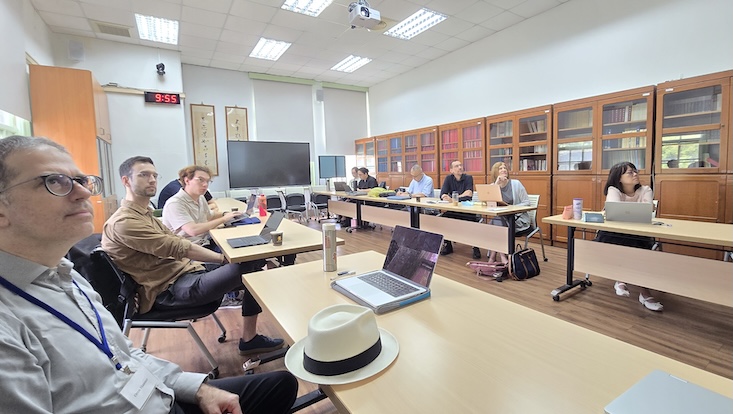
Photo: Carsten Krause
Workshop Participants during the Lecture
On September 15 and 16, the National Taiwan University (NTU) hosted an international workshop on the topic “Rethinking socially engaged Buddhism: History, theory, and practice from early Buddhism to contemporary East Asia.” This workshop has been initiated by the NTU and the University of Hamburg, both of which are striving to intensify their academic collaboration. Building on their long-standing partnership, the Centers for Buddhist Studies at both universities did not only organize this workshop as an internal event, but also invited external experts to actively engage in their international exchange. This extraordinary event was supported by the NTU and Erasmus+.
The starting point of this workshop was the phenomenon commonly referred to as socially engaged Buddhism. Over the course of the 20th century, various designations have gained traction in different contexts, such as “Engaged Buddhism” and, in the Sinosphere, renjian fojiao 人間佛教, often referred to as “Humanistic Buddhism” or “Buddhism for the Human Realm.” This development raised a number of questions that are relevant both to the historical study of Buddhism in South Asia and to contemporary Buddhist practices in East Asia.
To what extent do these modern concepts – even if they are partly inspired by Christian models of social engagement – have historical precursors that would support the view that socially engaged forms of Buddhism are organically rooted in the teachings and practices of early Buddhism in South Asia? To what extent can the forms of Buddhism that developed in twentieth-century China and in contemporary Taiwan be situated within this broader conceptual framework? And what role do these various labels play in relation to one another?
Taiwanese Buddhist organizations are currently regarded as among the most dynamic and influential actors within the global Buddhist world. One of the aims of the proposed workshop at NTU was therefore to also invite representatives of these living Buddhist traditions, thereby extending the scholarly discussion beyond academic circles to include institutions whose agendas are explicitly oriented toward social engagement.
This workshop began on the first day with keynote addresses by Prof. Dr. Michael Zimmermann (University of Hamburg) on “Compassion as Strategy? Reconsidering Service to Others in Early Buddhism”, Prof. Dr. Her, Ray-Sheng 何日生(Deputy CEO, Tzu Chi Charity Foundation) on “The Theory and Practice of Applied Buddhism,” Dr. Carsten Krause (University of Hamburg) on “Buddhist Concepts and their Proponents in Dialogue with Scholars,” and Prof. Dr. Lawrence Lau 劉宇光 (National Chengchi University, Taiwan) on “Rethinking Humanistic Buddhism (人間佛教) and Engaged Buddhism (Le bouddhisme engagé): Differences and Mutual Enrichment.”
Following that, two doctoral candidates presented their research as part of a forum for early-career scholars: Leo Maximilian Koenig (University of Hamburg) on the topic “Renjian fojiao, Buddhist Scriptures, and Buddhist Academy Education: An Examination of Possible Relationshsips,” and Ven. Dengrong 釋鄧融 (NTU) on “Filial Piety in Early Buddhism.”
The second day consisted of round tables on two main themes (“Historical legitimation and Contemporary Expressions of Socially Engaged Buddhism,” “On Modern Labels of Buddhism, their Interrelationships, and their Current and Future Relevance”), during which each panelist was asked to give an introductory statement of 5 minutes and to join in the ensuing discussions. In addition to the scholars mentioned above, the participants in these discussions included Prof. Dr. Ven. Chao-hwei 釋昭慧 (Hsuan Chuang University), Prof. Dr. Elise Anne DeVido (Tzu Chi University), Prof. Dr. Oren Hanner (Duke Kunshan University), Prof. Dr. Ven. Jiannor 見諾法師 (Luminary Buddhist Institute), Prof. Dr. Liu Yining 劉怡寧 (Dharma Drum Institute of Liberal Arts), and Prof. Dr. Teng Wei-jen (Dharma Drum Institute of Liberal Arts).
This workshop proved to be a fruitful gathering of scholars from the two partner universities and other academic institutions, as well as experts on Buddhism. This interdisciplinary event highlighted how the participants’ differing perspectives can lead to very distinct views on which categories and terms can be applied to various forms of Buddhist engagement, and what impact this can have on Buddhists’ self-perception as well as on how they are perceived by others.
The workshop participants came to the conclusion that it is worthwhile to continue observing the tension between the concepts of renjian fojiao and “Engaged Buddhism” and to keep the dialogue going.
Find the complete program here.